

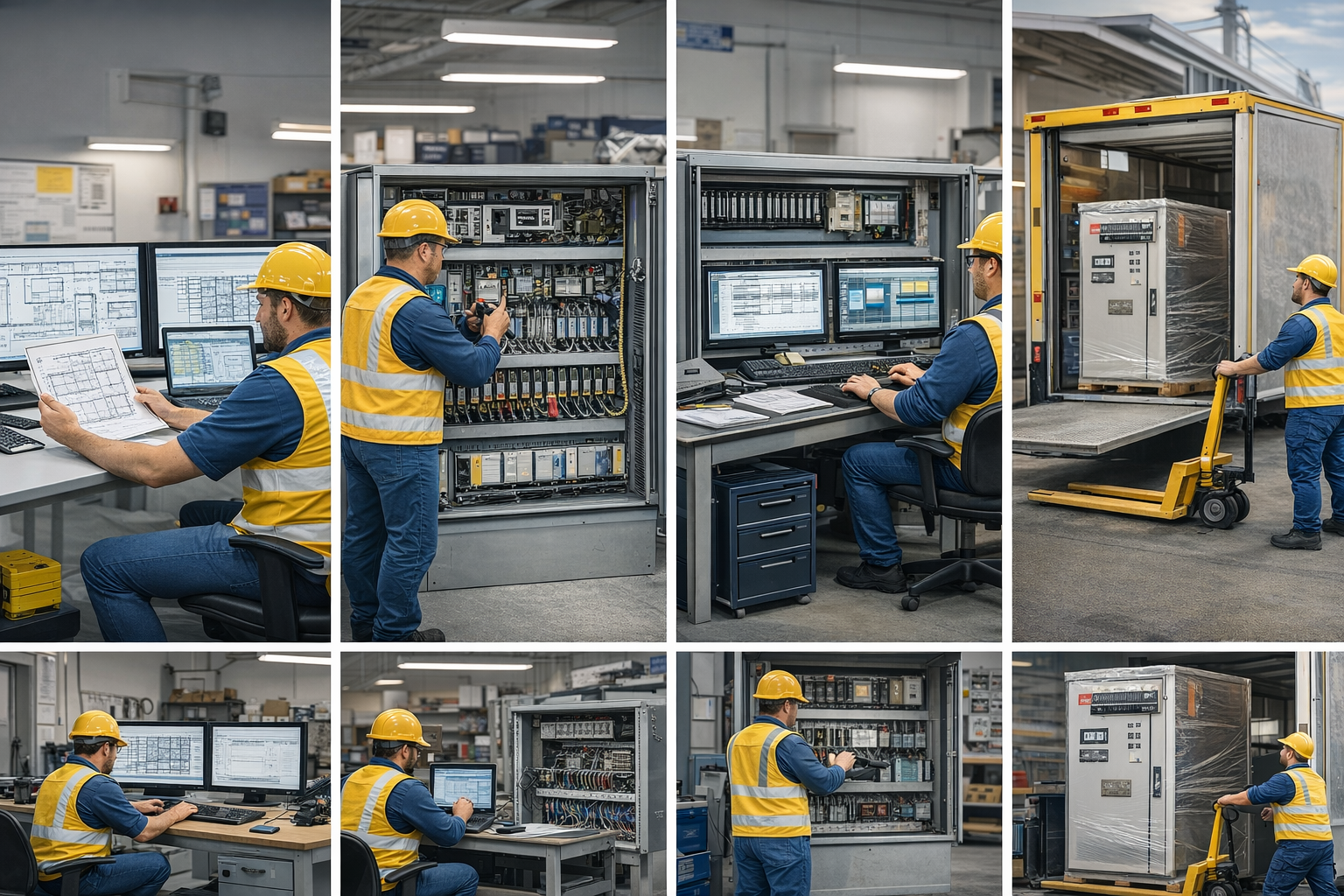
If your operation depends on automation, your control panels are doing more work than most people realize. They are not just housing electrical components. They are controlling processes, maintaining consistency, and keeping systems running the way they should.
When a control panel is built properly, everything works together smoothly. When it is not, issues start to show up quickly. You may see delays, inconsistent performance, or systems that require constant troubleshooting. In many cases, these problems are not caused by the equipment itself. They come from how the panel was designed and manufactured.
Understanding the control panel manufacturing process provides a clearer view of what goes into building systems that perform reliably in real-world industrial environments.
What is control panel manufacturing?
Control panel manufacturing is the process of designing, building, wiring, and testing electrical systems that control industrial operations. These systems are used across industries such as industrial gas, manufacturing, energy, and water treatment, where reliability and safety are critical.
A structured control panel manufacturing process ensures that systems operate consistently efficiently; the downtime is minimized, and performance remain consistent. It is not just about assembling components. It is about creating a system that works under real operating conditions.
It starts with engineering and system design
Every control panel begins with a strong engineering foundation. During this stage, engineers define how the system will function, how components will interact, and how the entire process will be controlled.
This includes developing electrical schematics, planning power distribution, and designing PLC and HMI architecture. It is also where safety requirements and environmental conditions are considered, especially for applications like industrial gas systems where precision and reliability are essential.
A well-structured design is what sets the entire project up for success. Without it, issues tend to surface later during fabrication or operation.
From design to physical build through control panel fabrication
Once the engineering phase is complete, the process moves into fabrication. This is where the design is translated into a physical system.
During this stage, enclosures are prepared, layouts are marked, and components are positioned based on the design specifications. Precision is critical here, because even small misalignments can create challenges later in the process.
Fabrication is not just about assembling parts. It is about building a structure that supports clean wiring, proper airflow, and long-term maintainability. This is where experienced teams and a strong fabrication process make a significant difference.
Wiring and assembly bring the system together
After fabrication, the panel moves into the assembly phase. This is where all electrical components are installed, wiring is completed, and connections are made according to the schematics.
Every wire must be routed correctly, labeled clearly, and organized in a way that supports both functionality and future maintenance. Clean assembly is not just about appearance. It directly impacts how easily the system can be tested, maintained, and repaired over time.
At this stage, attention to detail is critical. Small mistakes can lead to major system issues, delays, or safety concerns once the panel is deployed.
Programming and system integration
Once the panel is assembled, it becomes functional through programming and integration. Engineers develop PLC logic that controls the system and create HMI interfaces that allow operators to monitor and manage operations.
This is where the panel transitions from a physical build into a working system. Communication between components is established, and the control logic is tested to ensure everything operates as expected.
Programming plays a key role in efficiency, allowing systems to run smoothly and respond to changes in real time.
Testing and staging ensure reliability
Before any panel is delivered, it goes through a thorough testing and staging process. This step ensures that the system performs exactly as designed and meets all required standards.
Testing includes verifying inputs and outputs, checking functionality, and confirming safety compliance. Many systems must meet standards such as UL 508A, especially in regulated industries.
This phase helps catch issues early, reducing the risk of problems during installation or operation.
Final integration and mechanical assembly
The final stage of the process involves preparing the system for real-world use. This includes control for real-world use. This includes final panel assembly integration and ensuring that the panel is ready for installation.
At this point, all components, wiring, and programming come together into a complete system that is ready to operate within its intended environment. Proper integration ensures that the system works seamlessly with existing equipment and processes. Our mechanical assembly capabilities support this final stage, ensuring systems are delivered ready for deployment.
Why the Control Panel Manufacturing Process Matters?
Many operational issues can be traced back to weaknesses in the manufacturing process. Poor design, inconsistent fabrication, or insufficient testing often lead to delays, rework, and long-term maintenance challenges.
A structured approach to control panel manufacturing reduces these risks. Systems perform more consistently, installation is smoother, and long-term reliability improves.
This is particularly important in industries such as industrial gas, where system performance directly impacts safety and operational continuity.
Final thoughts
Understanding how control panels are designed and built provides a clearer perspective on system performance and long-term reliability. A structured process, from engineering through final assembly, plays a key role in ensuring consistency and minimizing operational issues.
A company that follows a clear, engineering-driven approach is far more likely to deliver systems that perform reliably over time. And in industrial environments, that reliability makes all the difference.
If you are planning a project or looking to improve system performance, working with the right partner is critical.
Explore our capabilities or contact our team to discuss how we can support your control panel and automation needs.
FAQ:
Many control panels must meet standards such as UL 508A, depending on the application and industry requirements.
Testing ensures that the control panel meets both functional and safety requirements prior to deployment. This includes validating I/O operations, confirming PLC logic execution, verifying communication protocols, and ensuring compliance with standards such as UL 508A. By simulating real operating conditions, testing helps detect faults that could otherwise lead to system failure, unsafe conditions, or extended startup delays.